If you expect Greater Heights to look and feel like one uniform neighborhood, your first few showings may surprise you. This part of Houston has a long development history, and that history shows up block by block in the homes you tour. If you are planning to buy here, it helps to know what architectural styles, lot patterns, and upkeep demands you are likely to see before you fall in love with a front porch. Let’s dive in.
Greater Heights Has A Layered Housing Mix
Greater Heights is a super neighborhood centered on Houston Heights, inside the 610 Loop and roughly bounded by Interstate 10, Interstate 610, Interstate 45, and White Oak Bayou. Houston Heights was founded in 1891 as Texas’ earliest planned community, incorporated in 1896, and annexed by Houston in 1918. That long timeline is a big reason the area does not present one single home style or development pattern.
According to the City of Houston, the eastern portion of Greater Heights was generally developed in the 1920s and 1930s, while the western portion developed mainly from the 1930s through the 1950s. Today, the neighborhood includes both rehabilitated older housing and denser redevelopment. For you as a buyer, that means one street may feature early 20th-century homes, while the next may include renovated properties and newer infill.
Historic district boundaries add even more variation. Greater Heights includes three City of Houston historic districts within Houston Heights West, East, and South. Some nearby areas changed significantly over time and were not included, and lots east of Oxford Street were not part of the original plats, which helps explain why lot shapes and home orientations can vary more than you might expect.
Historic Styles Buyers See Most
Within the Houston Heights historic districts, most buildings are one- or two-story single-family homes. The most common styles identified by the City of Houston are Queen Anne, Craftsman, Folk National, and Folk Victorian. Even when homes share a similar era, their details can look quite different from one another.
Queen Anne Homes
Queen Anne houses are usually the most ornate homes you will notice. They often feature irregular shapes, high-pitched roofs, prominent porches, bay windows, and decorative trim. If you are drawn to architecture with visual character and historic detail, this style may stand out right away.
Craftsman And Bungalows
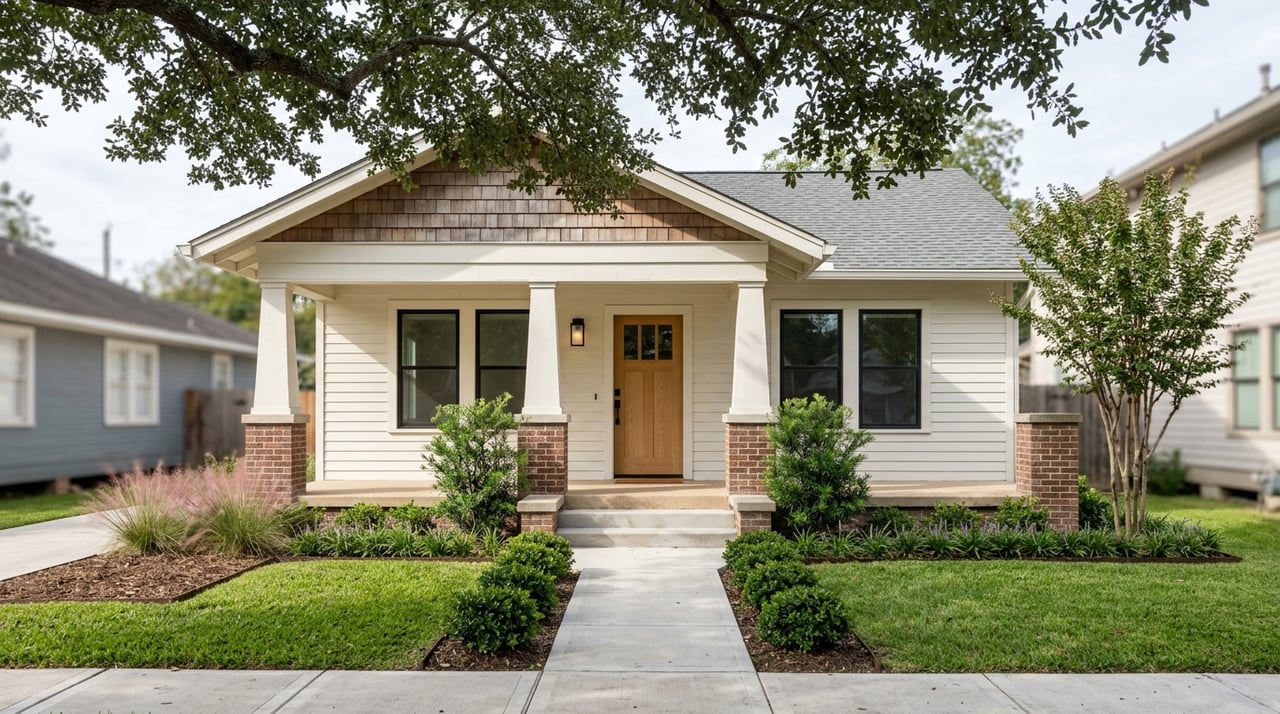
Craftsman homes and bungalows are common throughout the area and typically look simpler and more grounded. They tend to have low-pitched roofs, wide eaves, and more restrained detailing than Queen Anne homes. In nearby Norhill, the City of Houston notes that Craftsman bungalows are especially common.
Folk Victorian And Folk National
Folk Victorian homes usually have simpler forms with Victorian-era decorative touches. Folk National homes are often straightforward in shape and scale, making them feel practical while still fitting the historic streetscape. These styles help explain why Greater Heights can feel cohesive without looking repetitive.
Other Historic Subarea Styles
In Woodland Heights and Norhill, you may also see American Four-Square, English Bungalow, Pediment Bungalow, Tudor Revival, Minimal Traditional, and even some duplex forms. That broader mix matters because many buyers use “The Heights” as a catchall term, but the home styles can shift meaningfully depending on the specific section you are touring.
What Lot Size And Scale Tell You
One of the easiest ways to read a Greater Heights block is by looking at lot width, house scale, and setbacks. The City of Houston notes that homes on Heights Boulevard and along parallel Yale and Harvard corridors tended to be larger than homes on other residential streets. Larger homes were also often found on corner lots.
In some parts of Heights West, lots were only 33 feet wide. For you, that can mean tighter side yards, narrower driveways, and less consistent spacing between homes than you would find in a newer suburban neighborhood. Setbacks may also look less uniform from one property to the next.
New Construction Is Part Of The Market
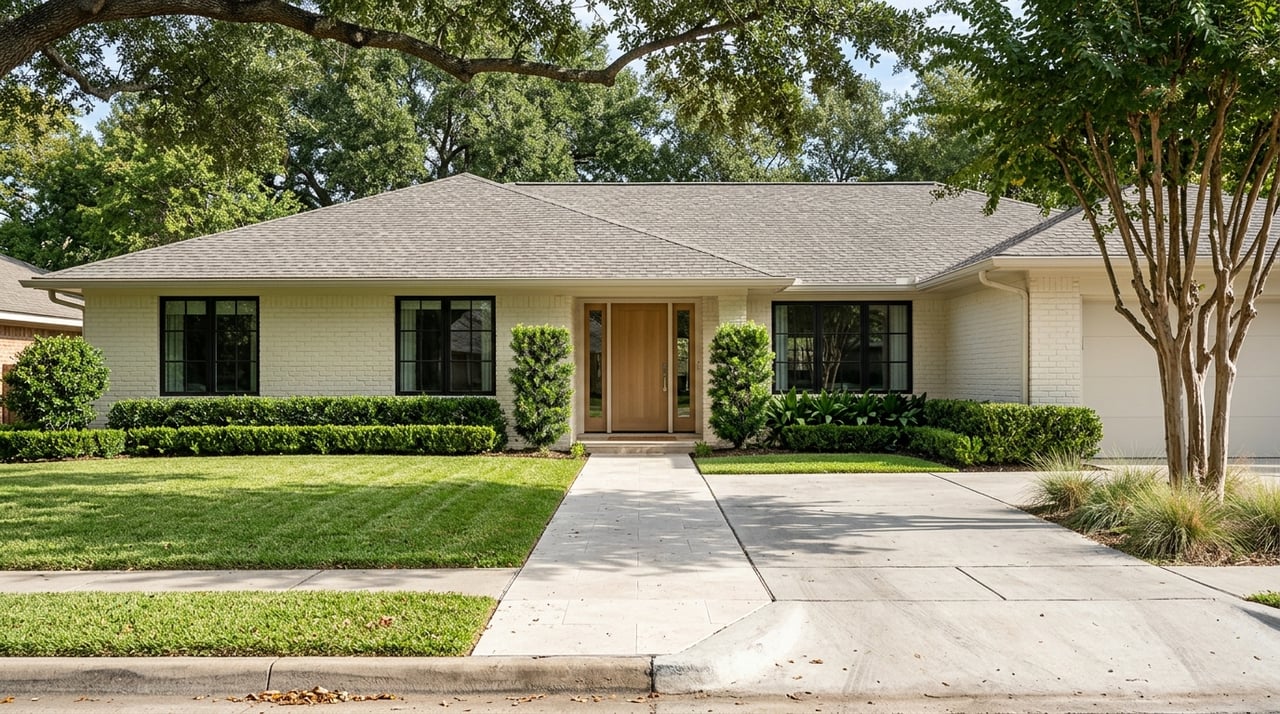
New construction is not unusual in Greater Heights. The City of Houston describes the area as having seen considerable investment and revival, with some sections redeveloped into denser urban forms while others retain rehabilitated older housing. So if you are shopping here, you should expect to see a real mix of old and new.
In the historic districts, new infill is allowed, and the city states that no specific architectural style is required. Instead, the focus is on compatibility with the surrounding streetscape. That compatibility is judged by features like massing, form, porch treatment, roof shape, foundation treatment, and window and door proportions.
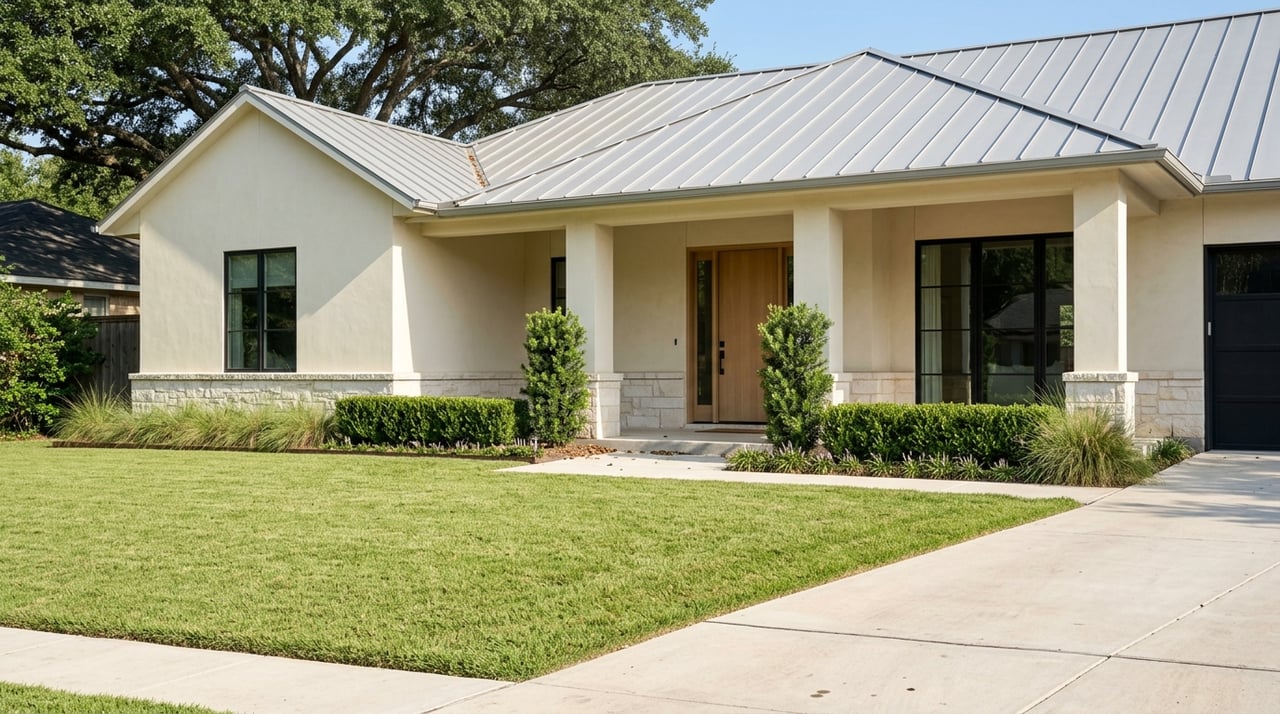
In practical terms, newer homes in or near historic areas may feel contemporary inside while still reflecting traditional street-facing design cues. You may also notice that even some newer homes sit higher than expected. That is because slab-on-grade construction is generally considered incompatible in the historic districts unless it is designed to read like pier-and-beam construction.
What Historic District Rules Mean For Buyers
If you are considering a home in one of the historic districts, it is important to think beyond the purchase itself. The City of Houston says exterior changes in these districts must be approved in advance when required, and a Certificate of Appropriateness may be needed. That can affect future plans for additions, porch work, window changes, or façade updates.
The city also notes that deed restrictions in many Houston neighborhoods may require additional civic-association approval. So before assuming a project will be simple, it is smart to confirm both city requirements and any neighborhood-level restrictions. This matters whether you are buying a fully updated home or a property you hope to personalize over time.
Price Expectations In Greater Heights
Pricing in Greater Heights depends heavily on the source, timing, and exact boundaries being measured. HAR reported a May 2026 average price of $855,726, a median price of $689,000, 545 listings, and 31 days on market for Heights/Greater Heights. Realtor.com reported a March 2026 median listing price of $625,000, 638 active listings, and a median of 33 days on market.
Those numbers should be treated as complementary benchmarks, not one exact answer. They likely reflect differences such as sold prices versus listing prices and different neighborhood definitions. For you as a buyer, the bigger takeaway is that Greater Heights spans a wide range of pricing depending on housing type, lot size, condition, and whether a home sits in one of the more historically intact pockets.
The historic districts appear to command a higher listing premium. Realtor.com shows median listing prices of about $1.099 million in Houston Heights East Historic District, $1.025 million in Houston Heights South, and $989,000 in Houston Heights West. These are listing prices rather than closed-sale prices, but they still suggest that historic character can carry significant value.
Maintenance Expectations By Home Type
The biggest day-to-day difference between home styles often comes down to maintenance. The City of Houston says most historic Heights homes use raised pier-and-beam foundations and feature large windows, transoms, porches, decorative trim, and wood siding. Those features create charm, but they can also mean more attention over time.
If you buy an older home, you may need to pay closer attention to foundation movement, moisture, exterior paint, wood trim, porch condition, and window upkeep. A newer home may offer lower near-term maintenance, especially if it has more contemporary materials and systems. Still, newer construction in the area may be shaped by compatibility expectations that keep it from feeling exactly like a typical suburban new build.
What To Watch For On Showings
When you tour homes in Greater Heights, it helps to compare more than finishes and square footage. Pay attention to how the house sits on the lot, how much outdoor space you really have, and whether the layout reflects its era. A charming bungalow and a newer infill home may serve very different needs, even if they are close in price.
Here are a few smart things to note during showings:
- Lot width and side-yard space
- Porch condition and exterior wood details
- Window style and apparent upkeep
- Foundation height and overall drainage patterns
- Whether the block feels mostly historic, mostly redeveloped, or mixed
- How much future exterior flexibility you may want
The main tradeoff in Greater Heights is often charm versus convenience. Original homes can offer architectural detail, porch presence, and a strong sense of place, while newer homes may deliver more modern function and less immediate upkeep. Neither is automatically better. The right fit depends on how you want to live and what level of maintenance and design oversight you are comfortable with.
If you are trying to sort through those tradeoffs, working with an advisor who understands Houston block by block can make a real difference. For tailored guidance on Greater Heights homes, pricing, and what to expect as you tour, reach out to Lauren Laigle.
FAQs
What home styles are most common in Greater Heights?
- Buyers in Greater Heights will commonly see Queen Anne, Craftsman, Folk National, and Folk Victorian homes, along with bungalows, American Four-Square homes, and some newer infill construction depending on the specific section.
What should buyers expect from lot sizes in Greater Heights?
- Lot sizes and widths can vary quite a bit, and some blocks include narrow lots with tighter side yards and less uniform setbacks than you might expect in newer neighborhoods.
What do historic district rules mean for Greater Heights buyers?
- If you buy in one of the City of Houston historic districts, some exterior changes may require advance approval and a Certificate of Appropriateness, and deed restrictions may add another layer of review.
What price range should buyers expect in Greater Heights?
- Published benchmarks vary, but recent reported figures show a broad Greater Heights median ranging from about $625,000 in listing data to $689,000 in HAR pricing data, with higher listing prices in the historic districts.
What maintenance issues are more common in historic Greater Heights homes?
- Older homes often require closer attention to pier-and-beam foundations, moisture, exterior paint, wood trim, porches, and older window systems because many retain traditional materials and features.
How is newer construction different from historic homes in Greater Heights?
- Newer homes often offer more contemporary layouts and potentially lower near-term upkeep, but in or near historic areas they may still follow design compatibility standards that influence height, massing, porches, and exterior appearance.